May 29, 2026 · 7-min read
How to Lead a Hymn Study at Home
You do not need to read music or run a program. A hymn study is mostly reading slowly and asking good questions.
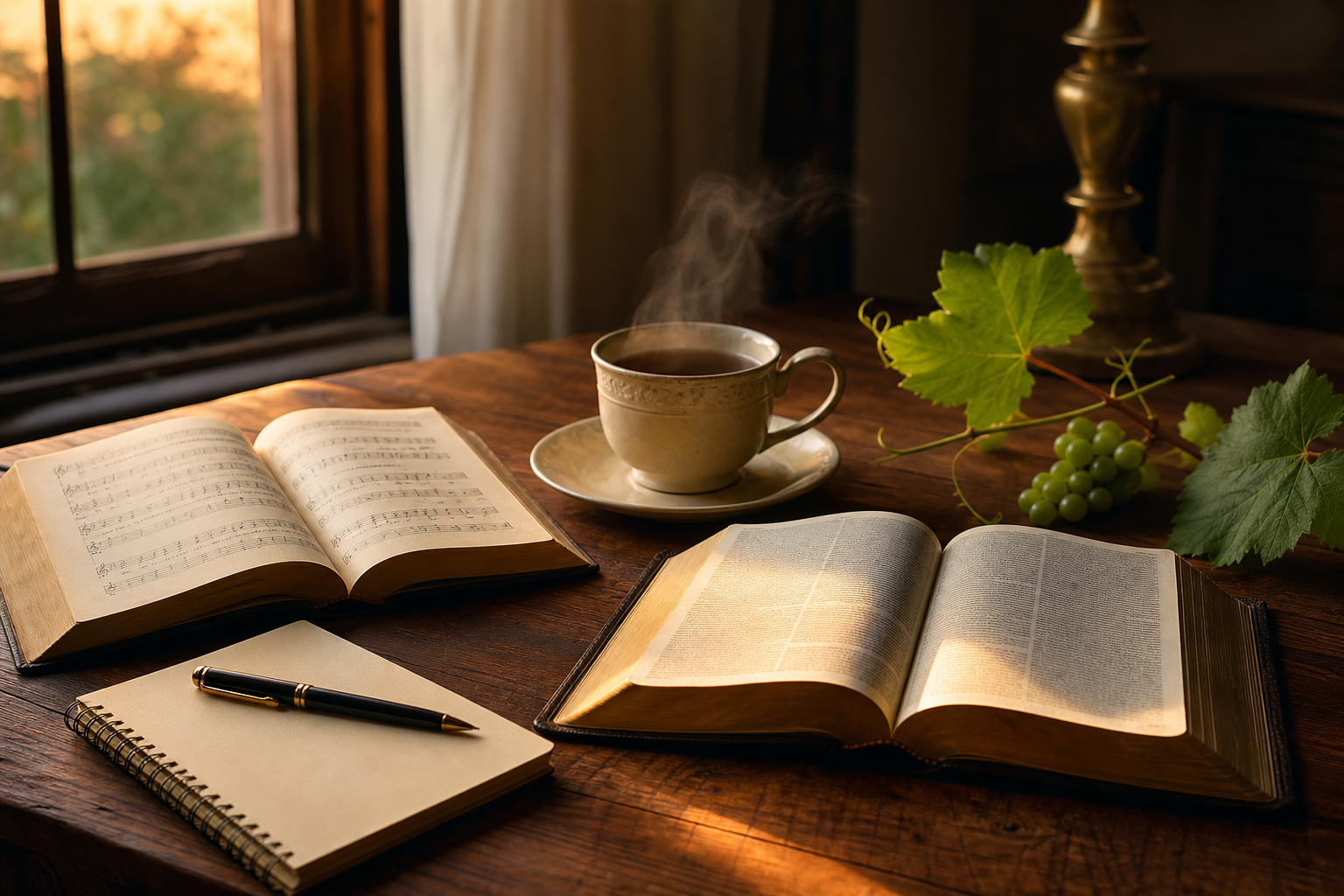
To lead a hymn study at home, choose one familiar hymn and move through five simple steps: read it aloud as a poem, tell the short story behind it, follow a few lines back into scripture, ask a couple of open questions, and then sing it together. You do not need to read music or run a program — a hymn study is mostly reading slowly and asking good questions.
People often assume that studying a hymn requires something they do not have — a music background, theological training, a confident singing voice. It does not. A hymn study is far simpler than that. It is reading a good text slowly, learning a little about where it came from, and letting the words open onto scripture. Anyone who can lead a conversation at the dinner table can lead a hymn study.
Here is a way to do it that works whether you are gathered with your children, a few friends, or a women's group on a weeknight.
Which hymn should you choose?
The first temptation is to cover too much. Resist it. One hymn, studied for an evening or spread across a week, will give you more than five hymns skimmed. Choose a hymn that is already familiar — Amazing Grace, It Is Well With My Soul, Be Thou My Vision, Holy Holy Holy. Familiarity is an advantage here, because the goal is to see something you have been singing past for years.
Stick to public-domain hymns, both because the words are free to print and share and because the older hymns tend to carry the richest histories. (If you are not sure which hymns are settled public domain, this short list is a safe place to begin.)
How do you start a hymn study?
Before anyone sings a note, read the hymn aloud — slowly, as a poem rather than a song. Hearing the words without the tune is often the first time people notice what they actually say. Ask one simple opening question: What is this hymn about? Let people answer in their own words. You will be surprised how often a hymn everyone "knows" turns out to be about something they had never quite named.
Why does the story behind the hymn matter?
Every great hymn has a person behind it, and usually a hardship. John Newton wrote Amazing Grace out of a past he was ashamed of — a story we tell in full in The Story Behind 'Amazing Grace'. Horatio Spafford wrote It Is Well after losing his four daughters at sea. Knowing the story changes the weight of the words. You do not need to be a historian — five minutes of true, well-sourced background is plenty, and it is the part people remember.
This is the moment a prepared study earns its keep. Having the composer's life, the date, and the setting already gathered means you can spend the evening on the conversation rather than on research.
How do you connect a hymn to scripture?
Good hymns are saturated with the Bible. Pick two or three lines and ask, Where does this come from? "When we've been there ten thousand years" leans on the promises of eternity; "It is well with my soul" echoes the language of the Psalms. Open the passages and read them alongside the hymn. This is the heart of a hymn study — watching a song turn back into the scripture it grew from.
What questions should you ask in a hymn study?
Close with two or three reflection questions and then let the room be a little quiet. Good questions are open, not quiz-like:
- Which line is hardest for you to sing honestly right now?
- What was this hymn's author trusting God for?
- Where does this hymn meet something in your own week?
With children, keep it concrete: What does this hymn say God is like? Let the answers be short. The point is not to land on the right answer but to sit, together, with a true one.
Then sing it
End by singing the hymn through once more. After an evening of reading, story and scripture, the same words you began with will sit differently. That shift — from singing past a hymn to singing into it — is the whole aim.
A little help getting started
If you would rather not assemble all of this yourself, our studies do the gathering for you. Each single-hymn study kit brings the lyrics, the composer's story, the scripture cross-references and the reflection questions into one print-ready file — for example the Amazing Grace Deep-Dive Study Kit. For families with younger children, the Family Hymn Singing Night Kit lays out four weeks of large-print lyric sheets, short stories and closing prayers, ready to print and keep by the table.
Whatever you use, the shape stays the same: one hymn, read slowly, met in scripture, and sung again at the end.
Frequently asked questions
- How do you lead a hymn study at home?
- Choose one familiar, public-domain hymn and stay with it. Read it aloud as a poem, tell the short story of who wrote it and why, follow two or three lines back into the scripture they grew from, ask a few open reflection questions, and then sing it together at the end.
- Do I need to read music to lead a hymn study?
- No. A hymn study is about reading a good text slowly and asking good questions, not about musical skill. Anyone who can lead a conversation at the dinner table can lead one — no music background or theological training is required.
- How long should a hymn study take?
- A single evening of 30 to 45 minutes is plenty for one hymn. You can also spread a single hymn across a week, spending a few minutes each evening on its story, its scripture and one reflection question.
- What hymns are best for a beginner hymn study?
- Start with a hymn that is already familiar and firmly in the public domain — Amazing Grace, It Is Well With My Soul, Be Thou My Vision, or Holy Holy Holy. Familiar hymns work best because the goal is to notice something you have been singing past for years.
- hymn study
- family worship
- small group
- devotional
Related reading
- The Story Behind 'Amazing Grace'The story behind Amazing Grace: John Newton, a former slave-ship captain, wrote the hymn in 1772 after a storm turned him toward faith. Here is his full life and why the words still land.
- 5 Public-Domain Hymns Every Family Should KnowFive public-domain hymns every family should know: Amazing Grace, It Is Well With My Soul, Be Thou My Vision, Holy Holy Holy, and Come Thou Fount — what each says, where it came from, and why it lasted.